Beyond the Beach
Sights & Attractions

Beyond
the Beach

Most visitors come to Monterosso for the sand. They leave having discovered Gothic churches with striped facades, a 14-meter Neptune carved into cliff rock, and centuries of monastic contemplation perched above the sea. The sights here earn their reverence.

Layers of Time

Monterosso was documented in 643 CE—the oldest record of any Cinque Terre village. What you see today is the sediment of nearly 1,400 years: medieval walls, Renaissance oratories, Baroque churches, Art Nouveau ambition, all compressed into a village that still prays, celebrates, and lives within them.

The church defines the old town. San Giovanni Battista's Gothic-Ligurian stripes anchor Monterosso's centro storico, a 13th-century declaration of faith and civic pride that has witnessed every baptism, wedding, and funeral since.

The convent guards the hill. The Capuchin friars chose this ridge four centuries ago, and their monastery still offers Van Dyck's Crucifixion and cloistered gardens where silence feels like permission.

The giant guards the beach. Il Gigante—that damaged Neptune carved from living rock—reminds visitors that Monterosso has always attracted those willing to dream at impossible scales.

The towers remember danger. Aurora Tower and the medieval fortifications along the shore once watched for Saracen raiders. Now they watch over tourists who have no idea what this coast once required.

Church of San Giovanni Battista Sacred Architecture
Monterosso

Church of San Giovanni Battista

"The striped Gothic facade that defines Monterosso's old town—13th-century faith made stone."

San Giovanni Battista rises in alternating bands of white marble and green serpentine, the Gothic-Ligurian style that marked prosperous medieval towns along this coast. Inside, the nave stretches toward Renaissance frescoes and the miraculous Madonna of the Sick. The rose window catches morning light in ways the builders certainly intended.

Where medieval devotion still breathes
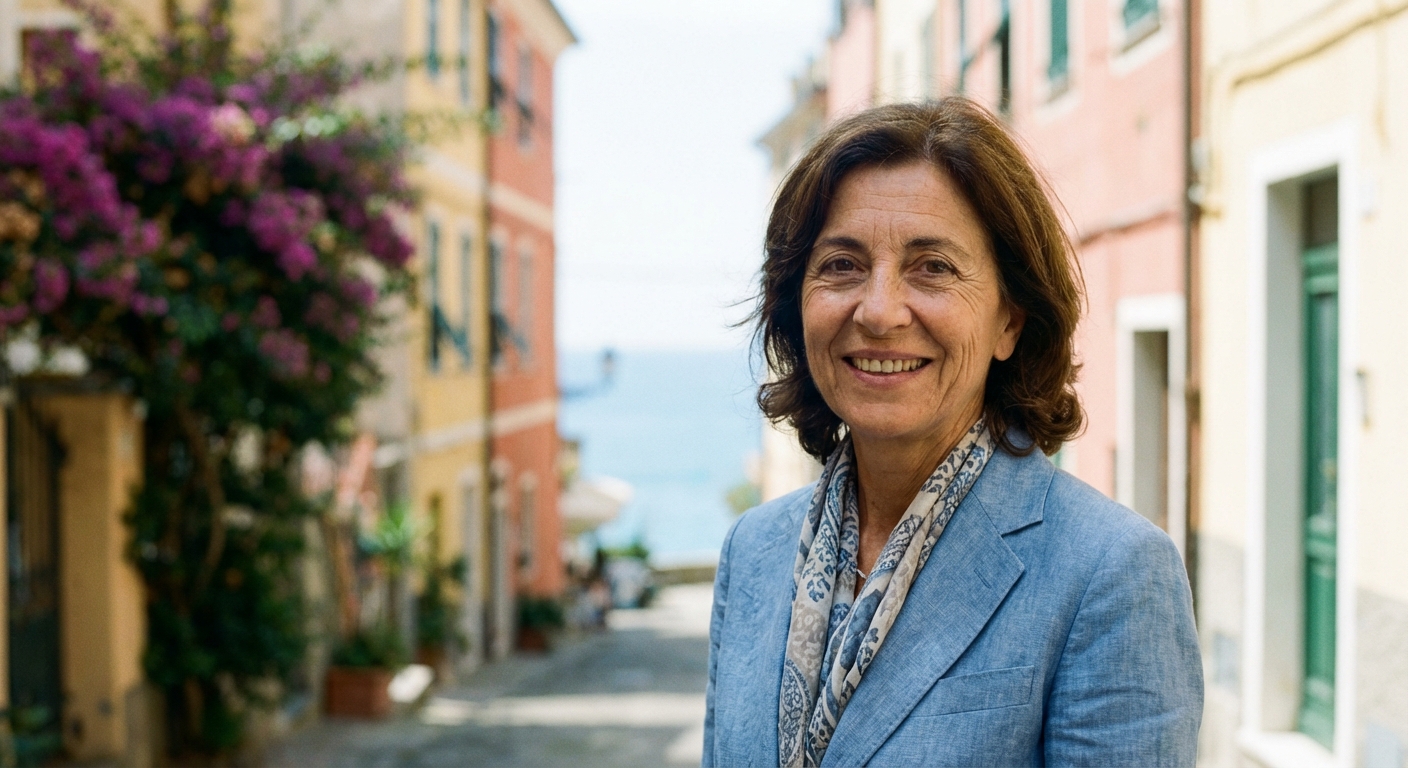
Giulia Rossi
Local Perspective
"Enter when you're not expecting to. The darkness, then the slow revelation as your eyes adjust—that's how the church wants to be experienced. The tourists who photograph and leave miss everything."

Giulia Rossi — Riomaggiore Expert

Essential Information

Location Map

Practical Details

Type
Sacred Architecture
Notes
Open 9am-12pm, 3pm-6pm. Modest dress required. Free entry. Morning light best for the rose window.
Editorial Interlude

The Montale Connection

"Nobel Prize poet Eugenio Montale spent his formative summers in Monterosso, finding in its light and landscape the images that would define Italian modernist poetry. His house still stands, marked with a plaque. The views he described in his verse remain unchanged. This is a village that shaped literature."

Il Gigante Icon
Monterosso

Il Gigante

"The 14-meter Neptune carved into the cliff—Art Nouveau ambition surviving war and weather."

Built in 1910 as part of Villa Pastine, Il Gigante once supported a grand terrace on his outstretched arms. World War II bombs destroyed the villa and damaged the statue, leaving him armless but defiant at Fegina Beach's eastern end. He represents something essentially Monterosso: the impulse to build beautiful, impossible things.

Where modern ambition met ancient rock

Giulia Rossi
Local Perspective
"I grew up thinking he was ancient. Learning he was created in living memory made him more remarkable—someone in 1910 looked at that cliff and decided to carve a god into it."

Giulia Rossi — Riomaggiore Expert

Essential Information

Location Map

Practical Details

Type
Icon
Notes
Visible from Fegina Beach. Best photos from the water or early morning. Free to view.
Convento dei Cappuccini Monastery
Monterosso

Convento dei Cappuccini

"Where Van Dyck's Crucifixion hangs and Capuchin gardens overlook both halves of the village."

The Capuchin convent perches on the ridge separating old town from Fegina, a 17th-century foundation that survived the Napoleonic suppression and continues as a place of prayer and reflection. The church holds Van Dyck's remarkable Crucifixion; the gardens offer views that explain why the friars chose this precise spot.

Where contemplation chose its view

Giulia Rossi
Local Perspective
"The convent is the most peaceful place in Monterosso. While tourists rush between beach and train, the Capuchins maintain the silence they've kept for four centuries. Enter slowly."

Giulia Rossi — Riomaggiore Expert

Essential Information

Location Map

Practical Details

Type
Monastery
Notes
Open 9am-12pm, 3pm-6pm. Modest dress required. Small donation for Van Dyck viewing. 10-minute walk from station.
Medieval Traces

Before Monterosso was a resort, it was a fortress. The towers, walls, and watchtowers that protected against Saracen raids have become restaurants, viewpoints, and ruins—but their shapes still define the village.

Aurora Tower survives from the 16th-century defensive system, now housing a restaurant with 360-degree views. Dinner here means eating where guards once watched for danger.

The medieval fortifications snake along the coast, mostly in ruins but still visible. Walking their traces reveals how seriously this coast took the threat of attack.

The Oratorio dei Neri holds the Confraternity of the Dead, a medieval brotherhood still active today. Their processions through Monterosso's streets connect the village to centuries of communal faith.

The caruggi (medieval alleys) wind through the old town, their dimensions set by the width of laden donkeys. These narrow passages preserve the logic of a village that predates modern roads.

Aurora Tower Historic Landmark
Monterosso

Aurora Tower

"The medieval watchtower that now offers dinner with panoramic views—where defense became pleasure."

Aurora Tower is the best-preserved element of Monterosso's 16th-century defenses, a watchtower that once scanned the sea for approaching raiders. Now it houses Torre Aurora restaurant, where the terrace offers the only 360-degree view in the village. The transformation from military vigilance to sunset dining captures something essential about how this coast has changed.

Where watching became dining

Giulia Rossi
Local Perspective
"Book the terrace for sunset. The views are extraordinary—you can see the entire coast and understand why this position mattered. The food is excellent; the setting is the real star."

Giulia Rossi — Riomaggiore Expert

Essential Information

Location Map

Practical Details

Type
Historic Landmark
Notes
Restaurant reservations essential for terrace. Entrance through restaurant. Best at sunset. Tower views included with dining.
Oratorio dei Neri Sacred Site
Monterosso

Oratorio dei Neri

"The Confraternity of the Dead's oratory—where medieval devotion continues in the 21st century."

The Oratorio dei Neri belongs to the Confraternity of the Dead, a medieval brotherhood that still tends to Monterosso's departed and processes through village streets on holy days. The interior holds 15th-century frescoes depicting death, judgment, and salvation—the eternal concerns that medieval villagers carried as they fished and farmed.

Where the living honor the dead

Giulia Rossi
Local Perspective
"Most tourists walk past without knowing what's inside. The confraternity still functions—these are your neighbors, continuing what their ancestors started six centuries ago. That continuity is rare."

Giulia Rossi — Riomaggiore Expert

Essential Information

Location Map

Practical Details

Type
Sacred Site
Notes
Limited opening hours. Ask at the church or tourist office. Often closed but worth checking. Free entry.
Local Wisdom

The Morning Advantage

"Visit churches and monasteries in the morning, when the light through stained glass is strongest and the heat hasn't arrived. Leave the beach for afternoon, when its pleasures align with the sun's position. This is how Monterosso was meant to be timed."

Lemon Terraces Agricultural Heritage
Monterosso

Lemon Terraces

"The terraced groves that produce Monterosso's famous lemons—agriculture as architecture."

The lemon terraces above Monterosso represent centuries of agricultural engineering—dry-stone walls creating flat growing surfaces on impossible slopes. The Monterosso lemon is larger and more fragrant than ordinary citrus, prized for limoncello, desserts, and direct consumption. The terraces themselves are a sight worth hiking to reach.

Where patience created paradise

Giulia Rossi
Local Perspective
"In late spring, when the lemons are ripe and the blossoms are still hanging on, the scent in these terraces is overwhelming. This is what Monterosso smells like when it smells like itself."

Giulia Rossi — Riomaggiore Expert

Essential Information

Location Map

Practical Details

Type
Agricultural Heritage
Notes
Accessible via hiking paths above the village. Best in late spring for blossoms. Respect private property. Views reward the climb.
A Final Reflection

History Hidden in Plain Sight

Every Monterosso sight rewards attention. The striped church that anchors the old town. The giant carved into living rock. The convent gardens where friars have prayed for four centuries. The tower where guards watched and tourists now dine.

The beach will always draw visitors—but the sights reveal why this village has endured. Not just geographic luck, but generations of people building, praying, and defending something worth keeping.

Look up from the sand. Monterosso has more to show you.