Reading the Stones
What to See

Reading the
Stones

Riomaggiore is not a museum. It is a living document—every wall, every terrace, every narrow stair a sentence in an eight-century story of refuge, labor, and the sea.

The Layered Village

To understand what you're seeing in Riomaggiore, you must first understand what you're standing on: a thousand years of human determination carved into cliffs that once offered nothing but sanctuary from a dangerous world.

The village began as a refuge. Greek sailors fleeing conflict in the Vara Valley found these hidden coves around 1239. What they built was not a town—it was a fortress disguised as fishing huts.

The tower houses that line the harbor are not aesthetic choices. They are survivors of Saracen raids, built tall and narrow so families could defend from upper floors while the lower levels flooded with attackers.

You'll notice that nothing is flat. This is not carelessness. It is the only way to exist here. Every horizontal surface was earned—cut from rock, held by stone walls, defended against gravity and time.

The colors came later. The painted facades were originally practical: fishermen needed to identify their homes from sea. The beauty is accidental, which is perhaps why it feels so honest.

The Medieval Castle Historic Fortress
Riomaggiore

The Medieval Castle

"The village's original reason for existing—a defensive point against a hostile sea."

Built in 1260, the Castello di Riomaggiore was not a noble residence. It was pure function—circular walls designed to deflect cannon fire, positioned to see raiders approaching from any direction. What remains today is smaller than the original, but still commands the finest view in the village.

The view that made defense worth dying for
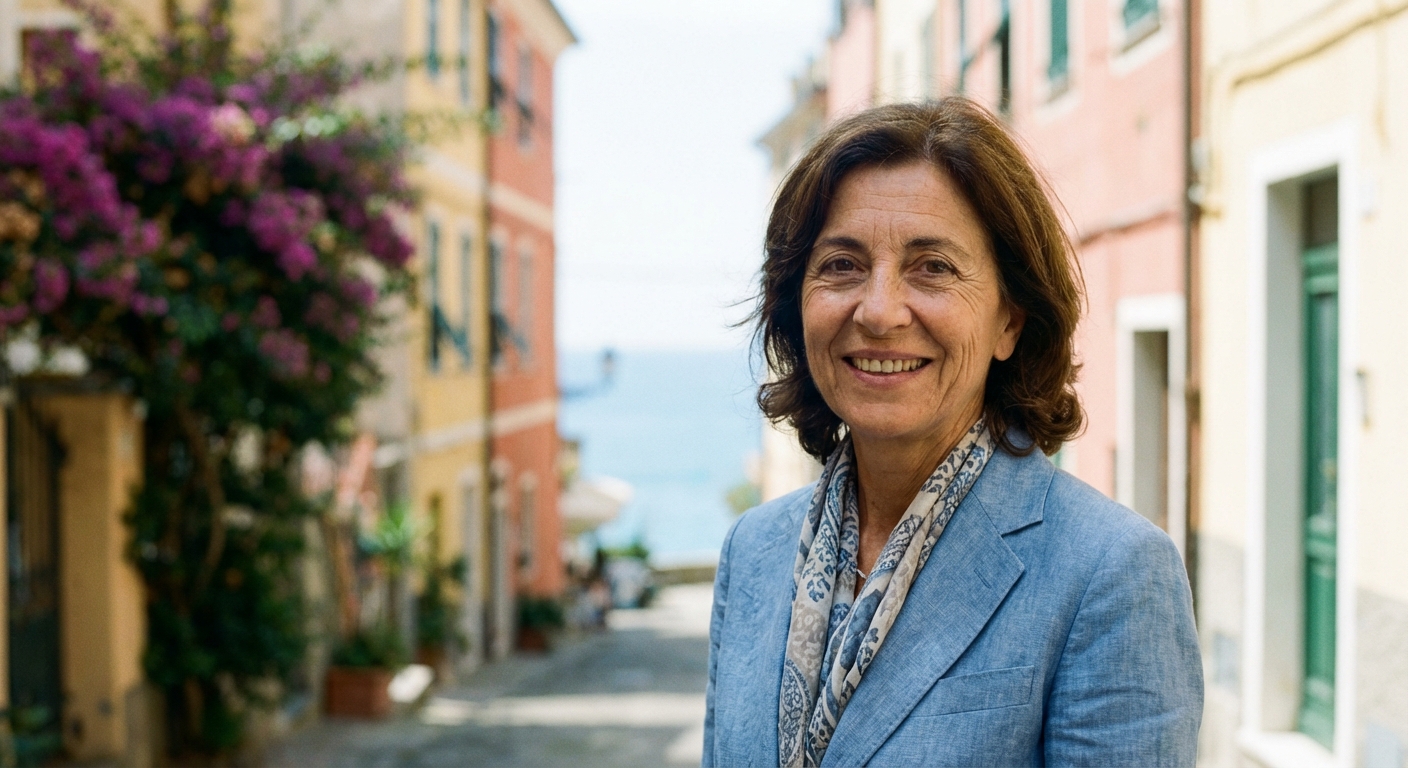
Giulia Rossi
Local Perspective
"Most visitors rush through. Don't. Sit on the walls at sunset and watch the fishing boats return. You'll understand why people fought to live here."

Giulia Rossi — Riomaggiore Expert

Essential Information

Location Map

Practical Details

Type
Historic Fortress
Notes
Free access. Best at sunset. 10-minute walk from harbor up steep steps.
Chiesa di San Giovanni Battista Gothic Church
Riomaggiore

Chiesa di San Giovanni Battista

"Where the village has baptized its children and buried its dead since 1340."

The Gothic church sits at the heart of the village, its rose window catching morning light that spills onto centuries-old stone floors. The paintings inside are not great art, but they are honest—local saints calming local storms, protecting local sailors.

Where faith meets the rhythm of the sea

Giulia Rossi
Local Perspective
"I was baptized here, as was my mother. The church smells of candle wax and salt air. That combination is the smell of home."

Giulia Rossi — Riomaggiore Expert

Essential Information

Location Map

Practical Details

Type
Gothic Church
Notes
Open daily 9am-12pm, 3pm-6pm. Modest dress required. No photography during services.
Editorial Interlude

The Art of Seeing Slowly

"The temptation in Riomaggiore is to photograph everything quickly and move on. Resist. The village reveals itself to those who sit still—the way light moves through streets, the sound of fishermen calling to each other, the particular quiet of noon when even the cats sleep."

The Harbor and Marina Living Heritage
Riomaggiore

The Harbor and Marina

"Not a tourist attraction—a working port where the old ways still hold."

The harbor is where Riomaggiore's economic history becomes visible. Watch the gozzo boats being pulled up ramps, nets spread to dry, old men debating the weather. This is not performance. It is the last generation of a fishing tradition that predates Italy itself.

Where work happens while tourists sleep

Giulia Rossi
Local Perspective
"Come at 7am. Watch the boats return. That's when the harbor shows its true face—tired, productive, real."

Giulia Rossi — Riomaggiore Expert

Essential Information

Location Map

Practical Details

Type
Living Heritage
Notes
Always accessible. Best in early morning. Respect working fishermen and their equipment.
The Terraced Vineyards Cultural Landscape
Riomaggiore

The Terraced Vineyards

"A thousand years of stone walls holding back gravity so grapes can grow."

The terraces above Riomaggiore represent one of humanity's most ambitious agricultural projects—millennia of dry-stone walls creating flat surfaces on cliffs where nothing should grow. The Bosco, Albarola, and Vermentino grapes that produce Cinque Terre wine are only here because generations refused to accept impossibility.

Where stubbornness became wine

Giulia Rossi
Local Perspective
"Walk the paths between the terraces in late afternoon. The light on the stone walls is golden, and you can taste the effort of centuries."

Giulia Rossi — Riomaggiore Expert

Essential Information

Location Map

Practical Details

Type
Cultural Landscape
Notes
Accessible via hiking trails. Best in late afternoon light. Respect active agricultural areas.
Hidden Perspectives

The famous views are famous because they appear in guidebooks. The best views are earned—found by those who wander past the obvious and keep climbing.

Punta Bonfiglio offers the classic postcard shot of the harbor. But arrive at sunrise, before anyone else, and the view transforms into something personal—just you and the village waking up.

The Santuario di Montenero requires a 45-minute climb, but from its courtyard you can see three villages at once, and on clear days, the curve of the Ligurian coast all the way to Portofino.

The most overlooked view is from Via Colombo at midnight. The tunnel that connects upper and lower village frames the harbor in darkness, fishing boat lights reflecting on black water.

Don't chase the views. Let them find you. The best moments in Riomaggiore happen while walking somewhere else.

Via dell'Amore Romantic Walkway
Riomaggiore

Via dell'Amore

"The world-famous path that clings to cliffs between Riomaggiore and Manarola."

Cut into the rock in the 1920s as a service path for railway workers, the Via dell'Amore became an accidental icon of romance. The name came from couples who used its shadowy corners for private meetings. Today it remains one of the world's most dramatic short walks.

Where utility became poetry

Giulia Rossi
Local Perspective
"The engineering is what impresses me—how they carved a level path through vertical cliffs. Love stories are fine, but human ingenuity is what made this place possible."

Giulia Rossi — Riomaggiore Expert

Essential Information

Location Map

Practical Details

Type
Romantic Walkway
Notes
Check current status—often closed for maintenance. 20-minute walk when open. Partially accessible.
Local Wisdom

Beyond the Famous

"Everyone knows the Via dell'Amore. But the paths above the village—to the sanctuary, through the vineyards—offer something the famous walk cannot: solitude, effort, and views that belong to you alone."

The Main Street Tunnel Village Architecture
Riomaggiore

The Main Street Tunnel

"The artery that connects Riomaggiore's two halves—carved through rock to link station to sea."

Via Colombo's tunnel is more than transit. It's the village's central social space, lined with small shops, gelaterias, and cafes. In summer, the cool darkness offers relief; in winter, shelter from storms. Locals stop here to gossip, tourists to orient.

The village's living room, carved from stone

Giulia Rossi
Local Perspective
"I've walked this tunnel ten thousand times. I still notice new details—the way paint peels differently in the damp sections, which shop owners are arguing today."

Giulia Rossi — Riomaggiore Expert

Essential Information

Location Map

Practical Details

Type
Village Architecture
Notes
Always open. Shops generally 9am-7pm in season. Quieter in early morning.
A Final Reflection

Let the Village Reveal Itself

You cannot see Riomaggiore in a day. You can photograph it in an hour, but that is not seeing.

The village gives its secrets to those who slow down—who sit in the same piazza at different hours, who return to the harbor when the tourists leave, who watch the light change on the same wall from morning to evening.

Come with questions, not checkboxes. The answers are written in stone.